Which is Better: Tarot or Lenormand?
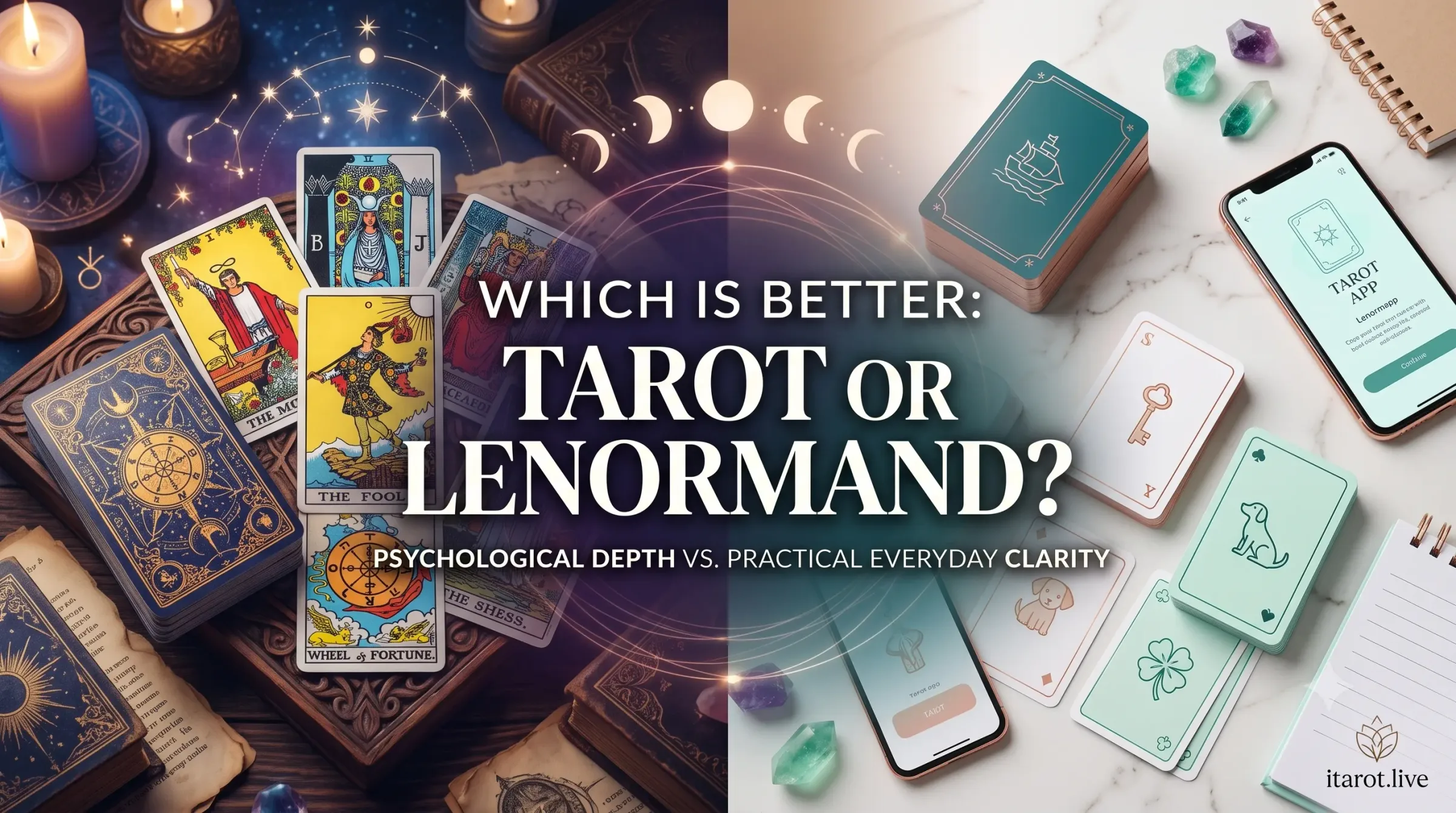
When stepping into the world of cartomancy and intuitive card reading, two systems dominate the space: Tarot and Lenormand.
If you are trying to decide which system to learn—or which type of reading is right for your current situation—you might wonder: Which one is actually better?
The short answer is: Neither is objectively "better," but they are built for entirely different purposes.
Tarot acts as a psychological mirror for internal reflection, while Lenormand acts as a practical lens for clear, real-world answers. Here is a deep dive into how they differ, how they work, and how to choose the right one for you.
1. Structure & Origins: 78 Archetypes vs. 36 Everyday Symbols
To understand the difference, it helps to look at how each deck is constructed.
The Tarot System
Deck Size: 78 cards (22 Major Arcana, 56 Minor Arcana).
Origins: Evolved in 15th-century Europe, heavily influenced by esoteric traditions, astrology, and Jungian archetypes.
Style: Rich, complex, and highly visual. A single Tarot card—like The Moon or The Empress—contains layers of emotional, spiritual, and psychological symbolism.
The Lenormand System
Deck Size: 36 cards.
Origins: Named after the famous 19th-century French fortune-teller Marie Anne Lenormand, though the system originated as a German parlor game (The Game of Hope).
Style: Minimalist and direct. Cards feature everyday, concrete imagery: The Letter, The Dog, The Ship, The Key, or The House.
2. Reading Style: Intuitive Storytelling vs. Synthesized Grammar
How you read the cards in a session is where the two systems diverge most dramatically.
+-----------------------------------------------------------------------+
|                       TAROT vs. LENORMAND                             |
+-----------------------------------------------------------------------+
| Feature             | Tarot Cards            | Lenormand Cards        |
+---------------------+------------------------+------------------------+
| Core Focus          | "Why" & Internal State | "What/Who" & Practical |
| Card Interpretation | Standalone or Spread   | Read in Pairs/Combinations|
| Tone                | Nuanced, Philosophical | Direct, Blunt, Clear   |
| Primary Use Case    | Self-Reflection, Growth| Situation Analysis     |
+-----------------------------------------------------------------------+
Reading Tarot: Deep & Fluid
In Tarot, cards can often be read individually. Drawing a single card like The Hermit can trigger a 20-minute introspection on solitariness, inner wisdom, and personal boundaries. Interpretation depends heavily on personal intuition, emotional resonance, and visual details.
Reading Lenormand: Sentence-Building
In Lenormand, individual cards rarely stand alone. Instead, Lenormand functions like a language where cards act as nouns, adjectives, and verbs:
The Rider (1) = News / Message
The Dog (18) = Friend / Loyalty
Read together, Rider + Dog simply means “News from a loyal friend.” The meanings are precise, synthesized, and leave little room for vague poetry.
3. Psychological Mirror vs. Practical Compass
When choosing between the two, consider what kind of question you are asking.
Turn to Tarot when asking open-ended, internal questions:
"What hidden emotional block is holding me back in my career?"
"How can I heal from this relationship?"
"What lesson does this life chapter have for me?"
Turn to Lenormand when asking specific, practical, real-world questions:
"What is the atmosphere like in this upcoming job interview?"
"Where are my lost keys?"
"How will this business contract unfold over the next month?"
In short: Tarot tells you why you feel the way you do and how to grow. Lenormand tells you what is likely happening around you on a practical level.
4. Can You Use Both Together?
Yes! Many modern practitioners use Tarot and Lenormand as complementary tools in the same session.
For instance, you might pull 3 Tarot cards to examine your mindset and emotional readiness for a major life pivot, and then pull a pair of Lenormand cards to get a tactical snapshot of the practical steps or immediate obstacles in front of you.
The Verdict: Which One Should You Choose?
Choose Tarot if you love storytelling, psychology, shadow work, art, and exploring the deep "why" behind your life events.
Choose Lenormand if you prefer straightforward answers, logical systems, clear timing, and practical day-to-day clarity.
Neither system is superior—they are simply two different languages for reading the patterns of life.
Looking to explore card symbolism and practice daily draws in a clean, ad-free environment? Try itarot.live for your daily self-reflection and intuitive guidance routine.
Recommended reading
How to Do Your First Tarot Reading: A Beginner’s Step-by-Step Guide
If you’re new to Tarot, you may have had this thought: “I have a Tarot deck, but where do I actually start?” With 78 cards, different spreads, upright and…
How Many Tarot Cards Are There? Understanding the 78 Tarot Cards
If you are new to Tarot, one of the first questions you may have is surprisingly simple: How many Tarot cards are there? A standard Tarot deck contains 78…
Major Arcana vs Minor Arcana: What Is the Difference?
If you are just beginning to learn Tarot, one of the first things you will notice is that a standard Tarot deck contains 78 cards divided into two major…
The History of Tarot: From Playing Cards to Spiritual Guidance
The History of Tarot: From Playing Cards to Spiritual Guidance Tarot cards are now widely associated with fortune telling, spiritual guidance, self-reflection…
How Does Tarot Reading Work? Understanding the Meaning Behind the Cards
Tarot reading has fascinated people for centuries. Some see tarot as a tool for predicting the future, while others view it as a method of self-reflection…