What is the Difference Between Traditional and Modern Tarot Card Reading?
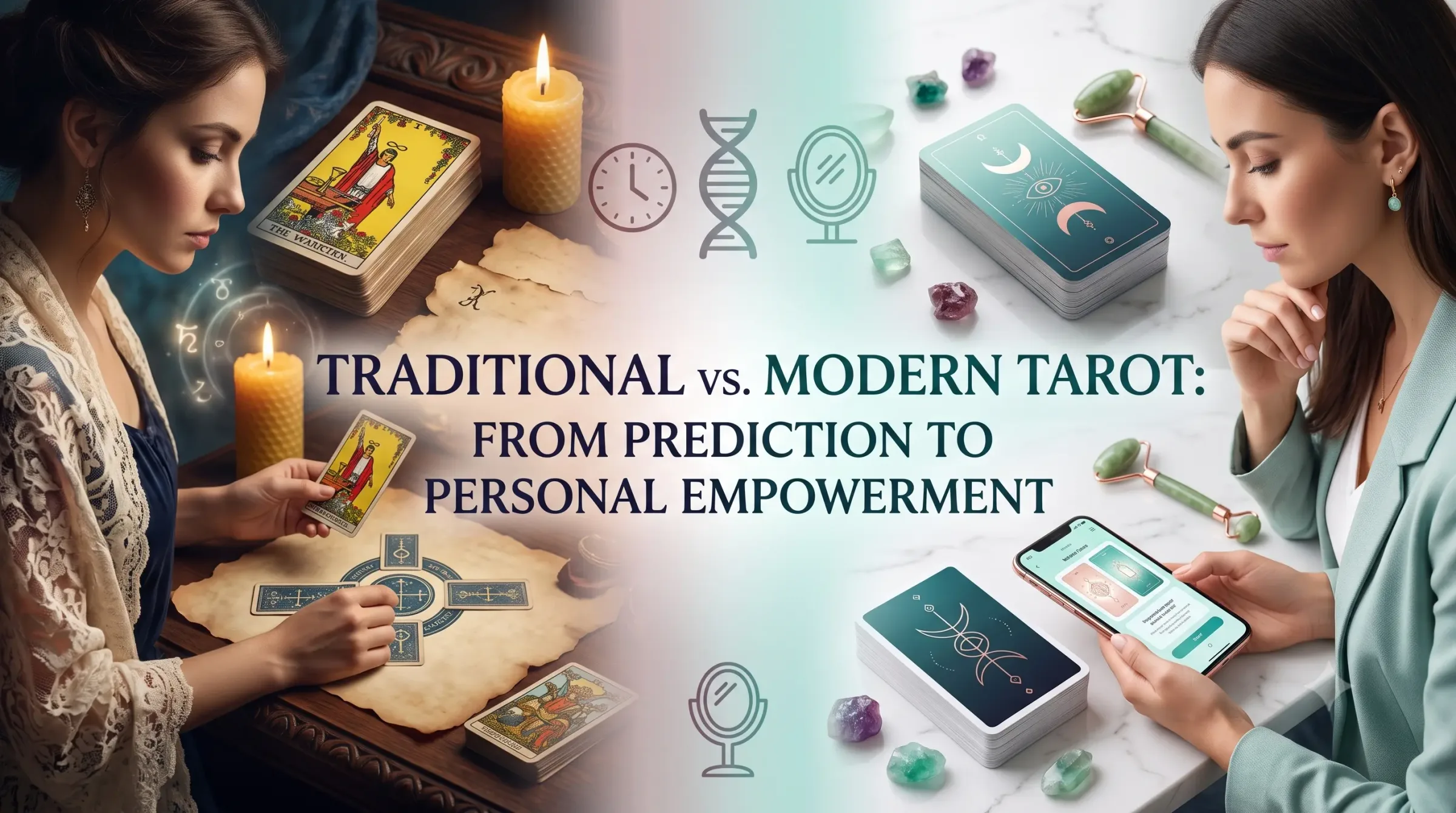
For centuries, Tarot cards have captured human imagination, evolving from a 15th-century European parlor game into one of the most widely used tools for self-reflection and guidance worldwide.
However, if you compare a Tarot session from the 19th century with a reading done today, you will notice a profound shift in mindset, interpretation, and intent. The core symbols on the 78 cards remain largely the same, but how we approach and use them has fundamentally transformed.
Here is a comprehensive breakdown of the key differences between Traditional and Modern Tarot reading practices.
1. Predictive Fate vs. Psychological Reflection
The most fundamental shift between traditional and modern Tarot lies in the underlying philosophy of the reading.
Traditional Tarot (Fatalistic & Predictive)
Historically, Tarot was viewed as a fortune-telling tool used to predict fixed future events. The practitioner was seen as a vessel with special access to hidden knowledge. Questions were often outcome-focused: "Will I get married?" or "Will this business venture succeed?" The cards were interpreted as rigid signs of fate that could not easily be altered.
Modern Tarot (Empowerment & Psychology)
Today, Tarot is widely understood through the lens of Carl Jung’s psychological archetypes, synchronicity, and subconscious projection. Instead of predicting an unchangeable future, modern readings treat the cards as a mirror for your immediate emotional and mental state. The mindset shifts from "What will happen to me?" to "What can I learn from this situation, and what choices do I have?"
Key Takeaway: Traditional Tarot focuses on what destiny has planned; Modern Tarot focuses on how your current subconscious shapes your choices.
2. Rigid Dogma vs. Intuitive Interpretation
How readers define and interpret card meanings has also evolved significantly over time.
DimensionTraditional Tarot ReadingModern Tarot ReadingCard MeaningsStrict, pre-defined lookup rules (e.g., The Tower always means literal disaster).Contextual, fluid, and intuitive based on imagery and user dynamics.ReversalsHeavily emphasized (upside-down cards often meant pure negative outcomes).Optional; often interpreted simply as internalized or blocked energy.Role of the ReaderAn authoritative figure deliverer of "answers."A facilitator helping the inquirer unlock their own intuition.Spread FormatsComplex, strict layouts (e.g., traditional 10-card Celtic Cross).Flexible spreads, single daily draws, or open-ended self-reflection prompts.
Modern practices allow individuals to form a personal connection with the visual symbolism, making card pulls far more adaptable to daily journaling and mental clarity routines.
3. Light vs. Shadow: Handling "Scary" Cards
In a traditional setting, pulling cards like Death, The Tower, or The Devil could spark genuine fear or anxiety.
Traditional View: These cards were often taken literally or as ominous warnings of physical loss, betrayal, or sudden misfortune.
Modern View: Modern readers view these cards as vital metaphors for personal growth. Death represents radical transformation, closing old chapters, and making room for renewal. The Tower symbolizes the healthy breakdown of false beliefs or unhealthy structures. The Devil points to self-imposed limitations, unhealthy attachments, or habits that need awareness.
Modern Tarot embraces shadow work—using challenging symbols to explore uncomfortable truths and promote healing rather than fear.
4. Physical Decks vs. On-Demand Digital Tools
The medium through which people interact with Tarot has naturally expanded with technology.
Historically, a reading required a physical 78-card deck, specific ambient preparation, and often an in-person appointment with a reader.
Today, while physical decks remain popular for tactile rituals, digital tools and AI-assisted readers have made intuitive reflection available instantly 24/7. Modern interactive platforms allow users to conduct clean, distraction-free daily card pulls, explore symbolic meaning on the go, and journal their thoughts without needing a physical setup.
Conclusion: Which Approach is Right for You?
Neither approach is strictly "right" or "wrong," but they serve different personal needs:
If you value historical symbolism, classical structure, and clear-cut external guidance, traditional Tarot frameworks provide a rich foundation.
If you view Tarot as an objective psychological tool for mindfulness, stress management, self-reflection, and decision-making, modern intuitive Tarot is ideal.
Ultimately, Tarot is not about giving up control to mysterious external forces. It is about slowing down, looking at powerful visual archetypes, and asking yourself the right questions.
If you want to practice daily draws, explore card symbolism, and reflect at your own pace in a clean, ad-free space, try using itarot.live for your daily self-exploration routine.
Recommended reading
How to Do Your First Tarot Reading: A Beginner’s Step-by-Step Guide
If you’re new to Tarot, you may have had this thought: “I have a Tarot deck, but where do I actually start?” With 78 cards, different spreads, upright and…
How Many Tarot Cards Are There? Understanding the 78 Tarot Cards
If you are new to Tarot, one of the first questions you may have is surprisingly simple: How many Tarot cards are there? A standard Tarot deck contains 78…
The History of Tarot: From Playing Cards to Spiritual Guidance
The History of Tarot: From Playing Cards to Spiritual Guidance Tarot cards are now widely associated with fortune telling, spiritual guidance, self-reflection…
How Does Tarot Reading Work? Understanding the Meaning Behind the Cards
Tarot reading has fascinated people for centuries. Some see tarot as a tool for predicting the future, while others view it as a method of self-reflection…
What Is Tarot? A Beginner’s Guide to Tarot Cards and Readings
If you have ever caught a glimpse of a mesmerizing deck of Tarot cards, adorned with centuries-old imagery and mysterious symbolism, you might have felt a…