What Is Tarot? A Beginner’s Guide to Tarot Cards and Readings
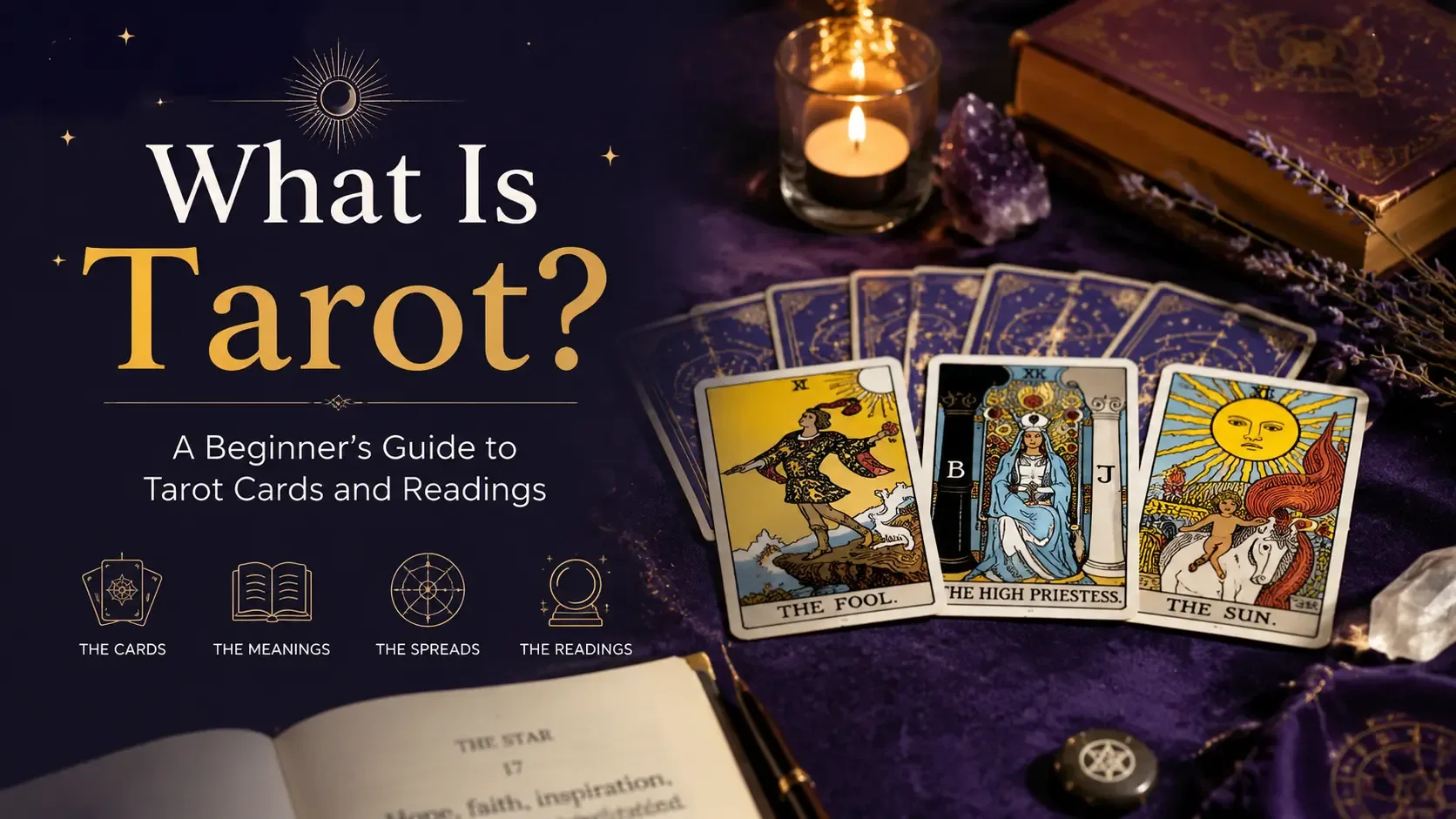
If you have ever caught a glimpse of a mesmerizing deck of Tarot cards, adorned with centuries-old imagery and mysterious symbolism, you might have felt a spark of curiosity. What are these cards? How do people read them? And can anyone learn to unlock their meaning?
Whether you see Tarot as a spiritual tool, a psychology-backed mirror for self-reflection, or simply a fascinating practice for personal growth, diving into the world of Tarot is an empowering journey. Here is a foundational guide to understanding what Tarot is, how a deck works, and how to start reading cards for yourself.
What Is Tarot?
At its core, a Tarot deck is a set of 78 cards rich with imagery, symbolism, and narrative arc. Originating as a card game in 15th-century Europe, Tarot evolved over centuries into a tool for divination, self-discovery, intuition building, and creative problem-solving.
Contrary to popular belief, Tarot cards do not require mystical powers to read, nor do they strictly predict an unchangeable future. Instead, Tarot acts as a storytelling mechanism. Each card represents a universal human experience—love, conflict, transformation, joy, or crossroads. By pulling cards, you bring hidden thoughts, underlying patterns, and fresh perspectives from your subconscious mind into conscious awareness.
The Structure of a Tarot Deck
A standard Tarot deck contains 78 cards divided into two major groups: the Major Arcana and the Minor Arcana.
                        ┌─────────────────────────┐
                        │   Standard Tarot Deck   │
                        │       (78 Cards)        │
                        └────────────┬────────────┘
                                     │
           ┌─────────────────────────┴─────────────────────────┐
           ▼                                                   ▼
┌──────────────────────┐                            ┌──────────────────────┐
│     Major Arcana     │                            │     Minor Arcana     │
│      (22 Cards)      │                            │      (56 Cards)      │
│  Major Life Lessons  │                            │    Everyday Life     │
└──────────────────────┘                            └──────────┬───────────┘
                                                               │
                                  ┌────────────────────────────┼────────────────────────────┬────────────────────────────┐
                                  ▼                            ▼                            ▼                            ▼
                           ┌─────────────┐              ┌─────────────┐              ┌─────────────┐              ┌─────────────┐
                           │    Wands    │              │    Cups     │              │   Swords    │              │  Pentacles  │
                           │ Fire/Action │              │ Water/Heart │              │ Air/Thought │              │ Earth/Matter│
                           └─────────────┘              └─────────────┘              └─────────────┘              └─────────────┘
1. The Major Arcana (22 Cards)
Numbered from 0 (The Fool) to 21 (The World), the Major Arcana cards represent significant spiritual milestones, core life themes, and major turning points. When a Major Arcana card appears in a reading, it points to a larger, overarching lesson or a long-term trajectory.
Examples: The Fool (New beginnings, leaps of faith), The Lovers (Relationships, alignment of values), Death (Transformation, endings leading to new beginnings).
2. The Minor Arcana (56 Cards)
The Minor Arcana reflects everyday situations, emotions, thoughts, and interactions. It is divided into four suits, similar to a standard deck of playing cards:
Wands (Element: Fire): Passion, inspiration, creativity, energy, and ambition.
Cups (Element: Water): Relationships, emotions, intuition, and matters of the heart.
Swords (Element: Air): Intellect, communication, conflict, truths, and mental challenges.
Pentacles (Element: Earth): Wealth, physical health, material security, work, and stability.
Each suit contains 10 numbered cards (Ace through 10) and 4 Court Cards (Page, Knight, Queen, King) that represent personal archetypes or stages of mastery over the suit’s energy.
How Does a Tarot Reading Work?
A Tarot reading is an interactive process between the reader, the question, and the imagery on the cards. Here is a simple, step-by-step breakdown of how a basic reading unfolds:
Formulate a Question: Open-ended questions yield the deepest insights. Instead of asking "Will I get this job?", try "What should I focus on to succeed in my career application?"
Shuffle and Focus: Clear your mind, shuffle the deck while focusing on your question, and cut the deck when you feel ready.
Draw the Cards: Pull one or more cards based on a specific layout (known as a spread).
Interpret the Imagery: Look at the visual cues, colors, symbols, and emotions depicted on the cards. Pay attention to how the cards interact with one another.
Simple Spreads for Beginners
When starting out, keep spreads simple so you are not overwhelmed by trying to synthesize too many meanings at once.
Spread TypeDescriptionBest Used ForOne-Card PullDraw a single card daily or to answer a direct, focused question.Daily reflection, quick check-ins, or straightforward clarity.Past - Present - FutureThree cards laid left to right representing background, current status, and potential outcome.Understanding the flow of an ongoing situation.Mind - Body - SpiritThree cards highlighting your mental state, physical well-being, and internal intuition.Personal alignment and holistic self-care check-ins.
Essential Advice for Starting Your Journey
Choose the Right Deck: The Rider-Waite-Smith (RWS) deck is the industry standard for beginners due to its clear, intuitive artwork and vast library of reference materials.
Trust Your Intuition: While guidebook meanings provide a helpful baseline, your immediate reaction to the card's art and symbols often yields the most relevant insight.
Practice Daily: Pull one card every morning. Take a moment to jot down what you see and notice how its energy reflects throughout your day.
Tarot is ultimately a dialogue with yourself. There are no rigid exams or mistakes—only a ongoing practice of learning to listen to your inner guide.
What questions do you hope to explore with your first card pull?
Recommended reading
How to Do Your First Tarot Reading: A Beginner’s Step-by-Step Guide
If you’re new to Tarot, you may have had this thought: “I have a Tarot deck, but where do I actually start?” With 78 cards, different spreads, upright and…
How Many Tarot Cards Are There? Understanding the 78 Tarot Cards
If you are new to Tarot, one of the first questions you may have is surprisingly simple: How many Tarot cards are there? A standard Tarot deck contains 78…
Major Arcana vs Minor Arcana: What Is the Difference?
If you are just beginning to learn Tarot, one of the first things you will notice is that a standard Tarot deck contains 78 cards divided into two major…
The History of Tarot: From Playing Cards to Spiritual Guidance
The History of Tarot: From Playing Cards to Spiritual Guidance Tarot cards are now widely associated with fortune telling, spiritual guidance, self-reflection…
What is the Difference Between Traditional and Modern Tarot Card Reading?
For centuries, Tarot cards have captured human imagination, evolving from a 15th-century European parlor game into one of the most widely used tools for self-reflection and guidance worldwide. However, if you compare a Tarot session from the 19th century with a reading done today, you will notice a profound shift in mindset, interpretation, and intent. The core symbols on the 78 cards remain largely the same, but how we approach and use them has fundamentally transformed.